An artificial tree can bring warmth, greenery, and a fresh look to almost any room. But sometimes, even a beautiful tree doesn’t look quite right when you first bring it home.
Maybe the branches seem a little stiff. Maybe the planter feels too small. Or perhaps the tree looks lovely on its own but somehow out of place in your living room.
The good news? You don’t need to replace your tree or completely rethink your decor.
A few thoughtful styling changes can make your artificial tree look more natural and feel right at home in your space.
Here are six simple ways to get started.
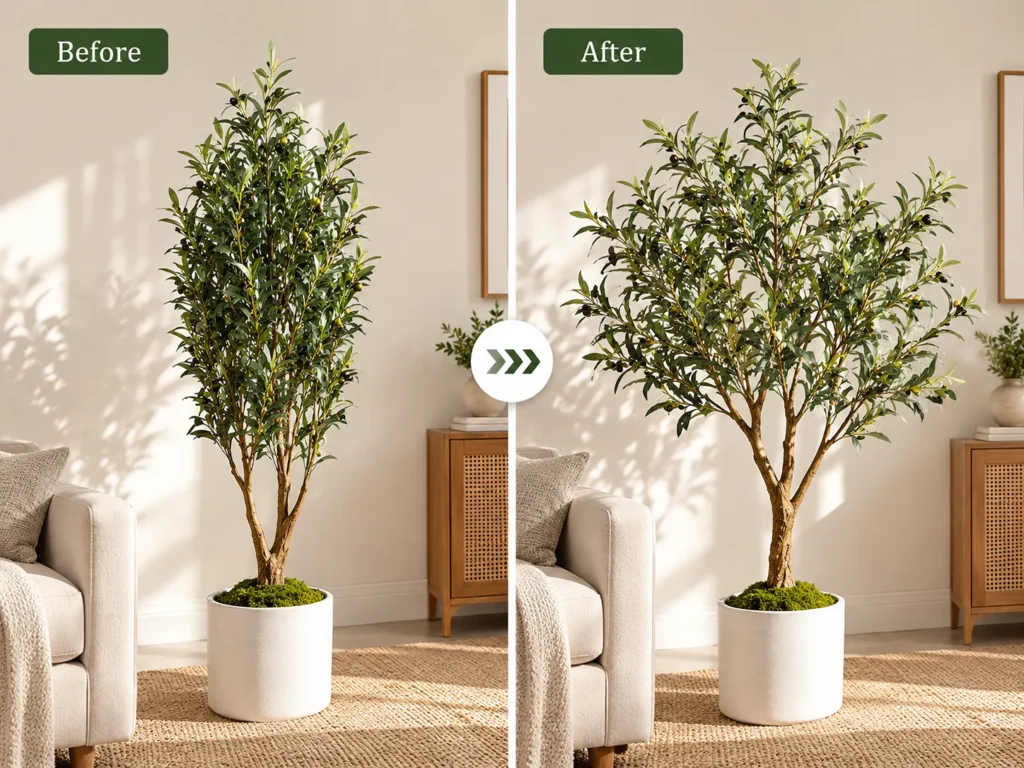
1. Give Your Artificial Tree a Little Shape
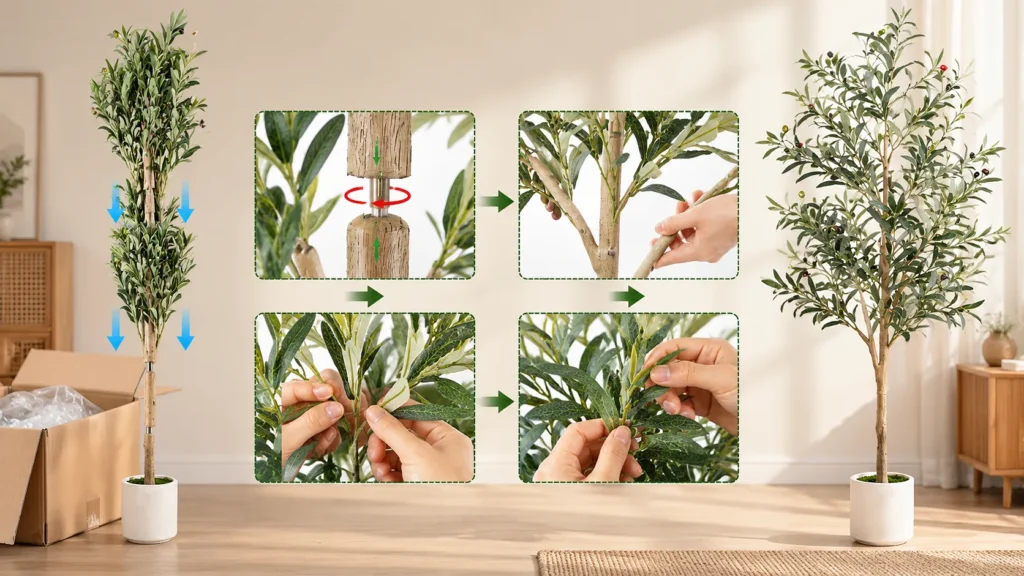
A new artificial tree rarely looks its best straight out of the box. The branches may sit close together, the leaves might overlap, and the whole tree can look a little flat.
That’s normal. A few small adjustments can make a surprisingly big difference.
Start by placing your tree where you plan to display it. Take a few steps back and look at its overall shape. Does one side look too full? Are there branches hiding behind others?
If your tree has adjustable branches, gently spread them apart, working from the bottom upward. Give the foliage some room instead of trying to fill every empty space.
For an artificial olive tree, a slightly open, airy shape often feels more natural than a perfectly rounded canopy. If you’re styling a cypress tree, keep its upright form rather than spreading the branches too far outward.
Don’t worry about getting everything right on the first try. Make a few adjustments, step back, and see how the tree looks from different parts of the room.
The goal isn’t to create a perfect shape. It’s to help the tree look as though it naturally belongs there.
Styling tip: Check your tree’s assembly instructions before adjusting the branches. Some artificial trees have flexible branches, while others are designed to hold a fixed shape.
2. Let a Few Imperfections Stay
One of the easiest ways to make an artificial tree look less artificial is to stop trying to make every branch match.
Think about a real tree. Some branches reach a little farther, some leaves overlap, and small gaps let the light through. That’s part of what makes it beautiful.
When arranging your artificial tree, don’t worry if one side looks slightly different from the other. Let a few branches sit higher or lower, where the tree’s construction allows.
And resist the temptation to make the foliage look perfectly even.
This works especially well with artificial olive trees. Their relaxed, spreading silhouettes look beautiful when there’s a little breathing room between the branches.For a closer look at their natural growth habit, see the Royal Horticultural Society’s guide to olive trees.
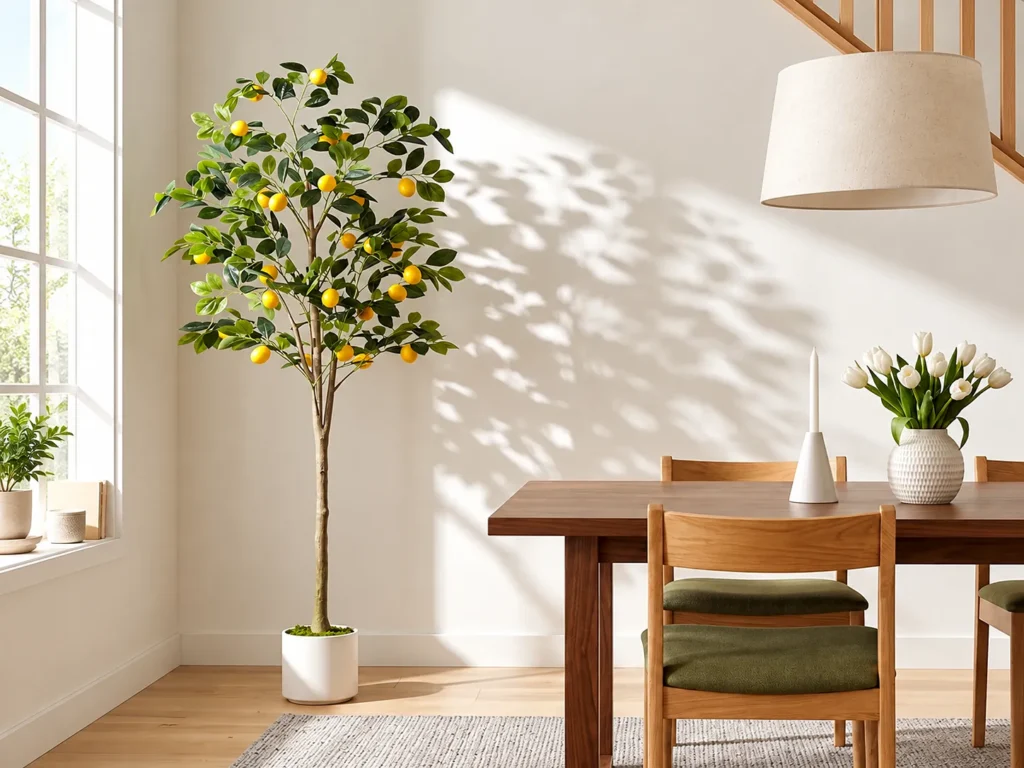
For a lemon tree, you might focus on keeping the foliage balanced while allowing the leaves and decorative fruit to remain visible.
A cypress tree, on the other hand, looks most natural when its more structured, upright shape stays intact.
Every tree has its own character. Rather than forcing them all into the same shape, let those differences guide your styling.
Sometimes, the little imperfections are exactly what make a tree feel more believable.
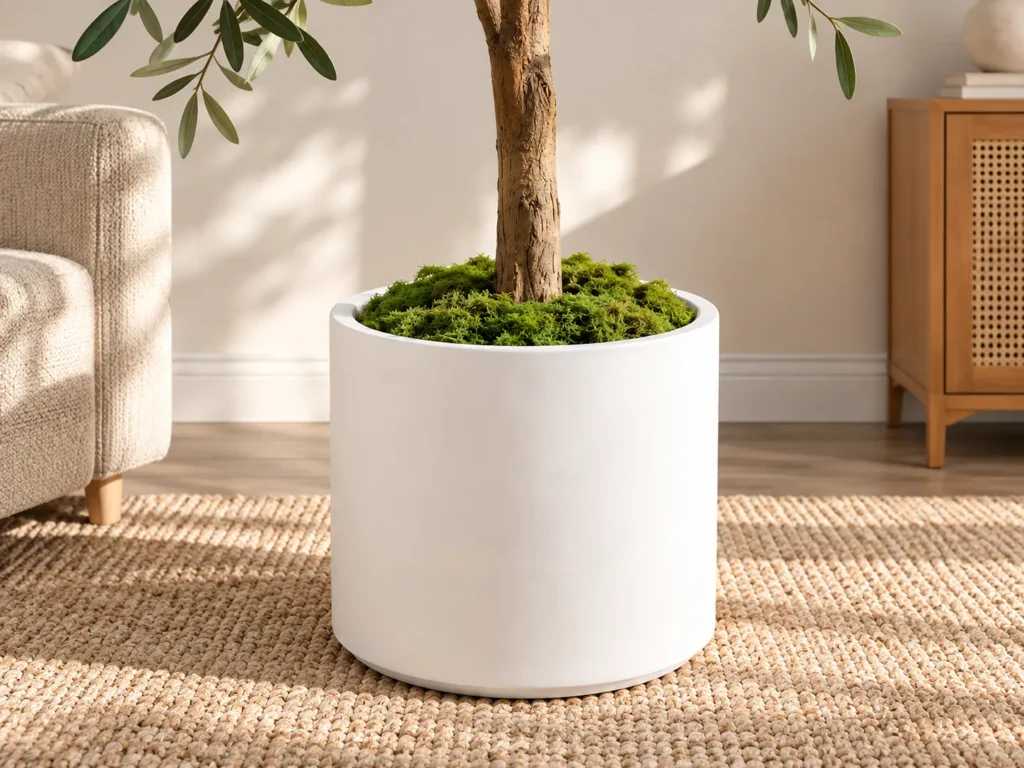
3. Give Your Tree a Better-Looking Planter
You might be surprised how much difference a planter can make.
Even a beautiful artificial tree can look unfinished when its original nursery-style pot is fully visible. A decorative planter helps the tree feel more like a considered part of your home rather than something you’ve just unpacked.
And you don’t need anything elaborate.
A simple ceramic planter, a textured stone-look pot, or a woven basket can completely change the overall impression.
Choose a Planter That Feels Right for Your Room
Think about the style of your space.
If you love warm neutrals, natural wood, and soft textures, a cream or sand-colored ceramic planter can complement an artificial olive tree beautifully.
For a more relaxed living room, a woven basket can add warmth without drawing too much attention.
If your home has a cleaner, more contemporary look, try a simple planter with a subtle texture and an understated shape.
Size matters, too. A tall tree in a tiny decorative pot can look top-heavy, while an oversized planter may overwhelm a smaller tree.
Aim for proportions that feel balanced with the tree and surrounding furniture.
Hide the Base for a More Finished Look
Once you’ve chosen your planter, take a look at the area around the trunk.
If the original pot or support structure is visible, you can use decorative moss or suitable stones to help conceal it.
You don’t need to cover everything heavily. A simple, natural-looking finish is often enough.
Just make sure the tree remains stable and that any decorative materials don’t interfere with its support.
It’s a small detail, but it can make the entire arrangement feel more intentional.
4. Find a Spot Where Your Tree Feels at Home
Sometimes the tree isn’t the problem. It’s where you’ve placed it.
An artificial tree can look completely different depending on the light, furniture, and surrounding space.
Try moving yours around before deciding on its final position.
Try Placing It Near a Window
There’s a reason real plants often look beautiful beside windows.
Natural light brings out the shapes of leaves and branches, while the connection to the outdoors makes greenery feel more at home.
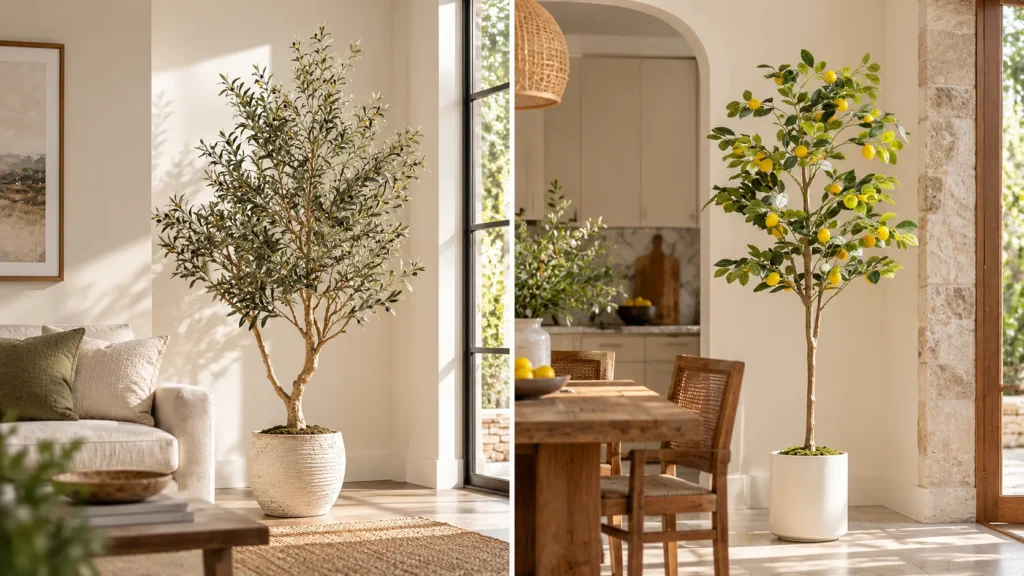
An artificial olive tree beside a bright living room window can create a relaxed, Mediterranean-inspired atmosphere.
A lemon tree near a breakfast nook or dining area can add a cheerful touch of greenery.
You don’t have to place your tree directly in the sun. In fact, prolonged direct sunlight may cause fading in some artificial foliage, so it’s worth checking the product’s care recommendations.
A softly lit corner near a window is often all you need.
Give Your Tree Enough Space
It’s tempting to squeeze an artificial tree into an empty corner, especially when you’re trying to make the most of a smaller room.
But if the branches are pressed against the wall or hidden behind furniture, the tree may lose its natural shape.
Try pulling it slightly away from the wall or giving the foliage a little room to spread.
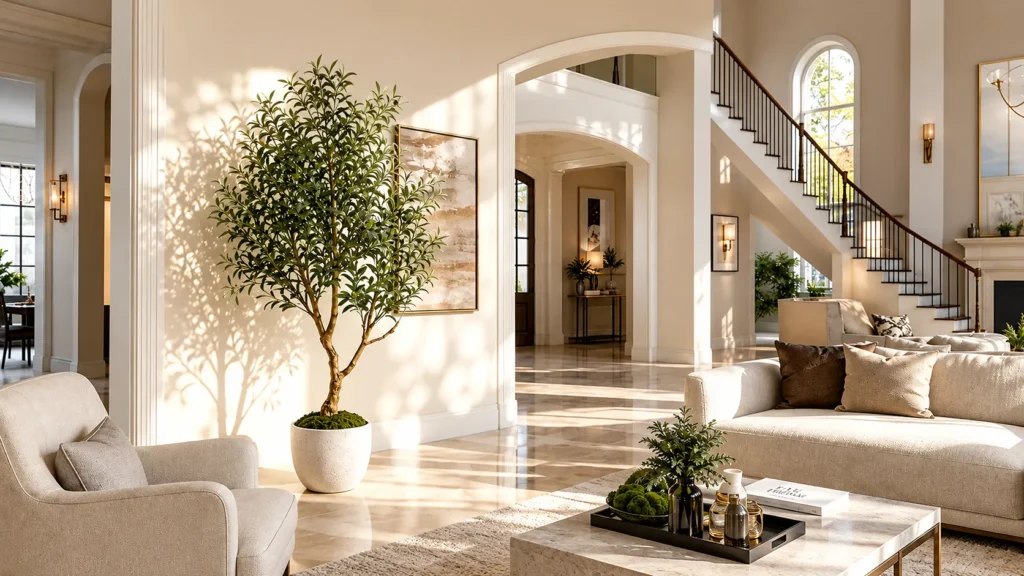
A tall artificial olive tree can look beautiful beside a sofa or accent chair, where its branches have space to create a gentle silhouette.
A narrower cypress tree may work better in an entryway or another area where a more vertical shape suits the space.
The best spot isn’t necessarily the emptiest corner. It’s the place where the tree feels like it belongs.Not sure which size fits your room? Explore our Shop by Height guide to find the right proportions for your space.
5. Make Your Tree Part of the Room, Not Just a Decoration
A tree can look realistic on its own and still feel disconnected from the rest of the room.
Often, the secret is in how you style the space around it.
Rather than treating your artificial tree as a separate decorative object, think of it as part of the room’s overall arrangement.
Repeat Natural Colors and Textures
You don’t need to redesign your room to make an artificial tree fit in.
Start with what you already have.
If your living room includes light wood furniture, linen upholstery, or warm neutral colors, an olive tree in a textured ceramic planter can complement those materials naturally.
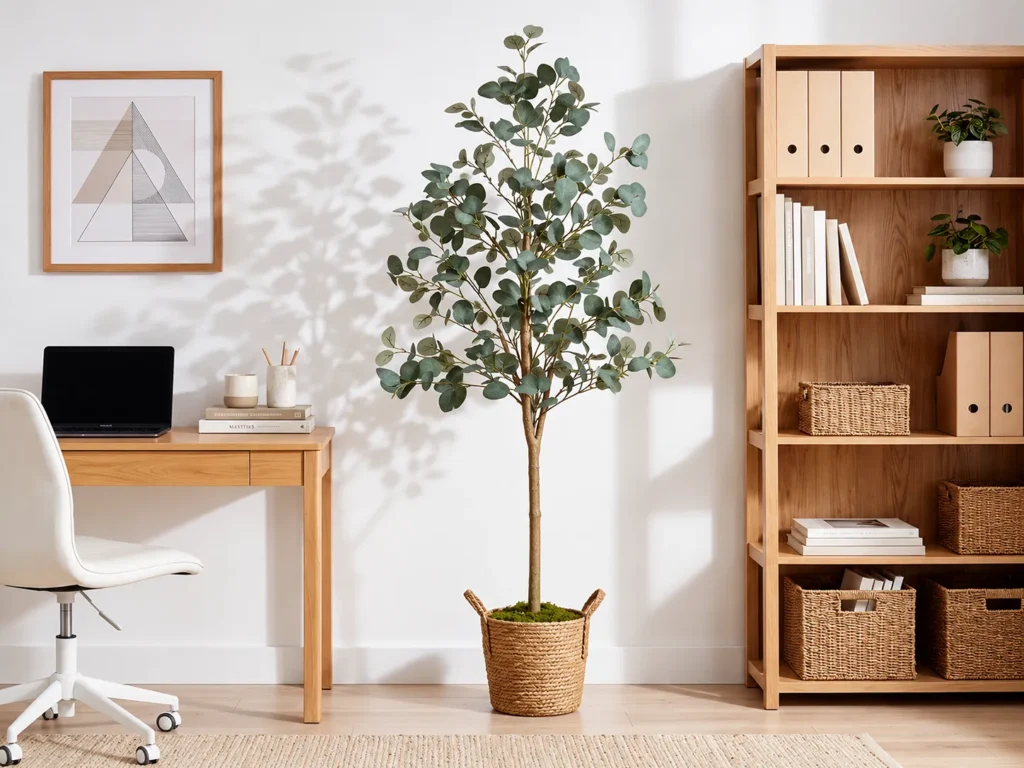
If you have a cozy reading corner with a soft armchair and a woven rug, a eucalyptus tree can add another layer of gentle greenery.
The idea is to create a connection between the tree and its surroundings.
A few repeated textures or colors can make the whole room feel more cohesive.
Keep the Surrounding Decor Simple
Sometimes, less really is more.
If you place an artificial tree next to several small plants, tall vases, and other decorative objects, the area can start to feel crowded.
Try giving the tree a little visual space.
You might pair it with a simple accent chair, a small side table, or a floor lamp. There’s no need to fill every corner.
Let the tree’s natural shape be part of the room’s character.
This is especially effective with taller artificial olive trees, which can make a statement without needing much additional decoration.
6. Keep It Looking Fresh Over Time
Once you’ve found the right shape, planter, and placement, maintaining that natural appearance is relatively simple.
Artificial trees don’t need watering or regular pruning, but they can still collect dust or become slightly misshapen when moved.
A little occasional attention goes a long way.
Gently Remove Dust from the Leaves
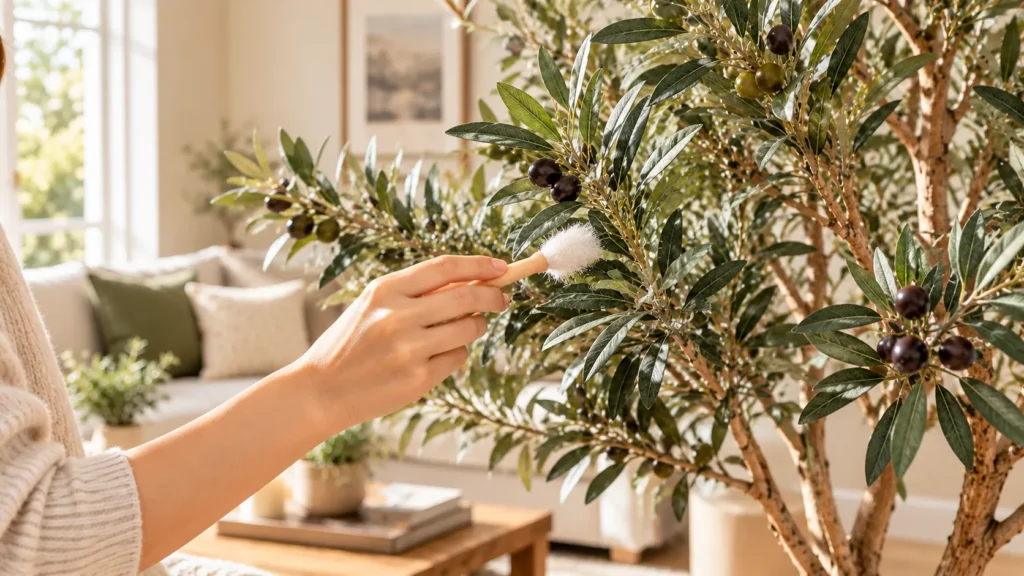
Dust can make artificial foliage look dull, especially on leaves with darker or smoother surfaces.
Use a soft microfiber cloth or a gentle duster to remove loose dust from the leaves and branches.
Take your time around delicate foliage and decorative fruit.
Avoid harsh cleaning products, and always check the manufacturer’s care instructions before using water or cleaning solutions.For more advice on choosing and caring for faux greenery, see The Spruce’s guide to artificial plants.
Refresh the Shape When Needed
Every now and then, take a step back and look at your tree.
Have any branches shifted? Does one side look a little compressed after moving furniture or cleaning?
If the branches are designed to be adjustable, a few gentle changes can help restore the arrangement.
You don’t need to restyle the entire tree.
Often, a quick dusting and a small adjustment are enough to keep it looking its best.
Final Thoughts: A More Natural Look Is All in the Details
Making an artificial tree look more realistic isn’t about hiding every sign that it’s artificial.
It’s about creating a shape, setting, and overall arrangement that feel natural in your home.
Give the branches a little room. Choose a planter that complements your space. Find a spot with soft light and enough breathing room. And don’t worry if everything isn’t perfectly symmetrical.
Those small, thoughtful details can make a surprisingly big difference.
Whether you’re styling an artificial olive tree in your living room or adding a lemon tree to a sunny-looking dining space, the goal is the same: greenery that feels beautiful, relaxed, and right at home.
Bring a More Natural Look Into Your Home
From elegant olive trees to cheerful lemon trees and timeless greenery, explore artificial trees that bring effortless botanical style to your favorite spaces.
Explore All Artificial Trees →
Frequently Asked Questions
How do you make a fake tree look more natural?
Start by arranging the branches if they’re adjustable, allowing small gaps and natural variation in the foliage. A decorative planter, thoughtful placement, and simple surrounding decor can also make a big difference.
How do you fluff an artificial tree to make it look fuller?
If your tree has flexible branches, gently separate and arrange them according to the manufacturer’s instructions. Work gradually from the lower branches upward, and avoid forcing the foliage into a perfectly uniform shape.
What can you put on top of an artificial tree planter?
Decorative moss, imitation moss, or suitable stones can help conceal the original base and create a more finished appearance. Make sure the materials don’t affect the tree’s stability.
Where should you place an artificial tree in a living room?
Try placing it near a window, beside a sofa, or in an open corner where the foliage has room to spread. Choose a location that suits the tree’s height and shape, and avoid prolonged direct sunlight unless the product is designed for that exposure.