A beautiful home doesn’t always need more furniture or decorative accessories. Sometimes, a single tree can bring warmth, texture, and a sense of balance to a room.
Living trees offer natural beauty, but keeping them healthy indoors isn’t always easy. Limited sunlight, busy schedules, seasonal changes, and the demands of everyday life can make plant care more challenging than expected.
That’s why artificial trees are worth considering as a home décor option. Today’s well-designed artificial olive, eucalyptus, lemon, and cedar trees can bring the visual appeal of greenery into a space without requiring the same growing conditions or ongoing care as living plants.
But are artificial trees the right choice for every home? And what separates a realistic decorative tree from one that looks obviously artificial?
Let’s explore the practical benefits, design possibilities, and important trade-offs to consider before choosing one.
1. Enjoy Greenery Without the Daily Plant Care
One of the biggest advantages of artificial trees is simple: they don’t require the ongoing care that living plants do.
A healthy indoor tree may need appropriate sunlight, regular watering, occasional pruning, and attention to soil conditions. The University of Minnesota Extension’s houseplant care guidance explains how these needs change with growing conditions and seasons.Depending on the species and environment, it may also need protection from pests, temperature fluctuations, or overly dry indoor air.
For people who enjoy caring for plants, these routines can be rewarding. For others, they can become another responsibility in an already busy schedule.
A practical choice for busy households
Artificial trees can be particularly convenient for households where plant care isn’t a priority.
They may suit people who:
- Travel frequently or spend long hours away from home.
- Have struggled to keep large indoor plants healthy.
- Want greenery in a vacation home or occasionally used room.
- Prefer decorative pieces that require minimal ongoing attention.
Instead of worrying about watering schedules or whether a plant is receiving enough light, homeowners can focus on how the tree contributes to the room’s overall appearance.
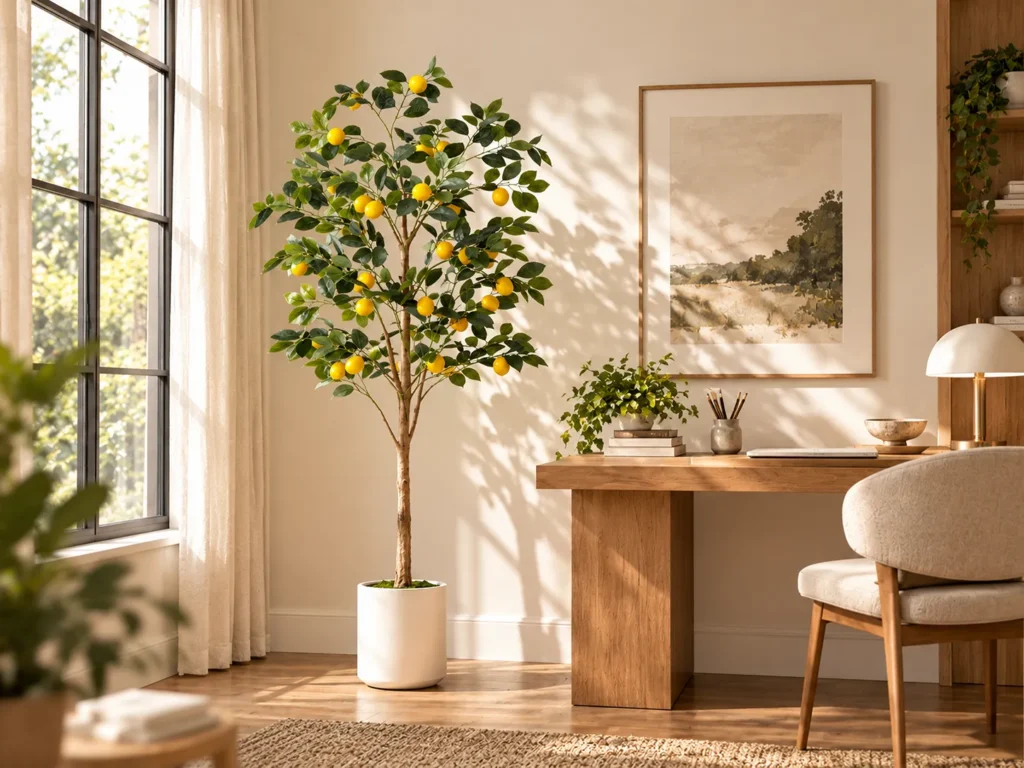
Less maintenance doesn’t mean no maintenance
Artificial trees still need occasional attention.
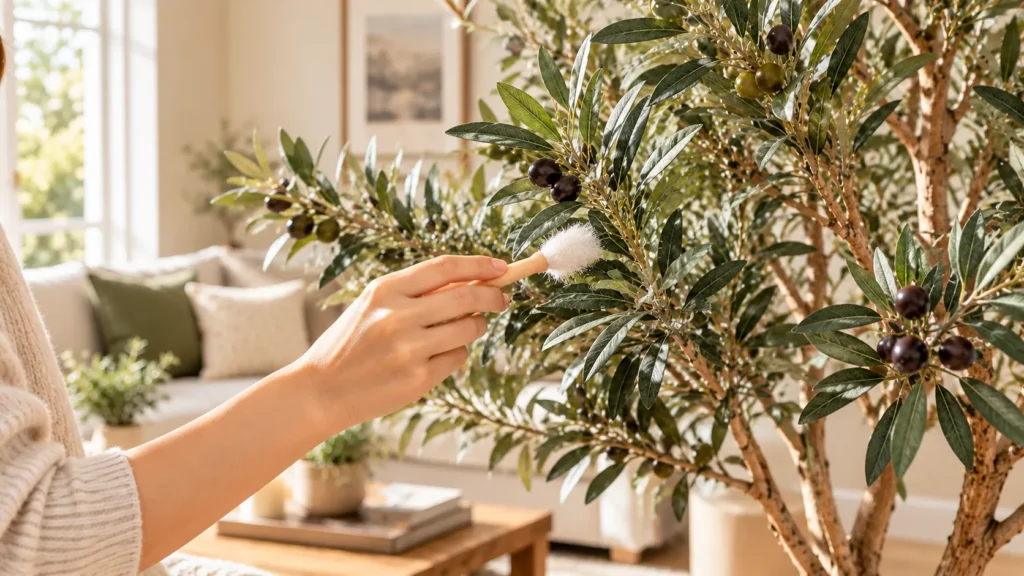
Dust can accumulate on leaves, especially in frequently used living areas. A soft microfiber cloth or gentle dusting is usually sufficient, although cleaning methods should always follow the product’s care instructions.
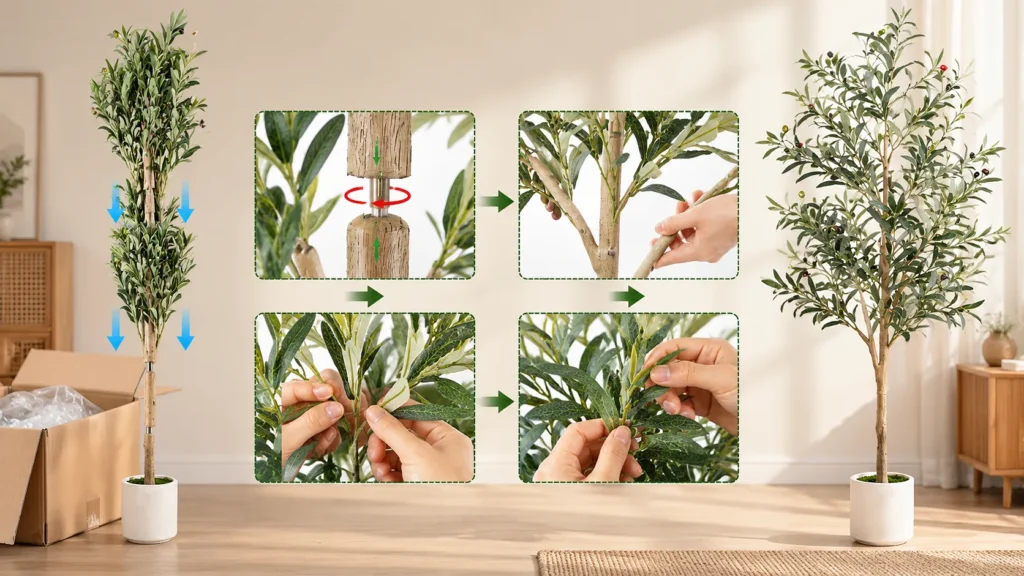
Branches may also need minor reshaping after storage or repositioning.
The difference is that these tasks are generally about maintaining appearance rather than keeping a living plant healthy.
For homeowners who love the look of greenery but not the responsibility of plant care, that distinction can make artificial trees an appealing alternative.
2. More Decorating Freedom in Low-Light Spaces
Not every attractive corner of a home offers the conditions a living tree needs to thrive.
A hallway away from windows, a dimly lit living room corner, or a guest room with limited natural light may look better with greenery, yet provide insufficient light for many popular indoor tree species.As the University of Minnesota Extension explains in its indoor plant lighting guide, different plants require different light levels to maintain healthy growth.
Artificial trees offer more flexibility because their appearance doesn’t depend on sunlight, soil, or watering.
This makes it easier to introduce greenery into spaces where a particular living tree might struggle.
They can also be useful in rooms with irregular use or inconsistent indoor conditions.
However, placement still matters. Artificial trees should be kept away from excessive heat and other conditions that could damage their materials. Direct sunlight may also affect the appearance of some artificial foliage over time.
And while artificial trees offer greater flexibility, they aren’t the only option for low-light rooms. Some living plants tolerate lower light levels when their other growing requirements are met.
The real advantage is having another decorating option when maintaining a living tree isn’t practical.
3. Create a Finished Look With Height and Natural Texture
Artificial trees do more than add greenery. When chosen thoughtfully, they can change how a room feels.
Unlike smaller tabletop decorations, a floor-standing tree introduces vertical height, organic shapes, and softer visual lines. These qualities can help balance furniture with strong geometric forms, such as rectangular sofas, cabinets, and dining tables.
A carefully selected tree can make a room feel more layered and visually complete without adding another substantial piece of furniture.
Add softness to structured interiors
Many contemporary homes feature clean lines, neutral walls, and relatively simple furniture.
While these elements create a calm foundation, a room can sometimes feel overly rigid when everything follows the same straight lines and proportions.
The irregular branching and natural silhouette of an artificial tree introduce a softer contrast.
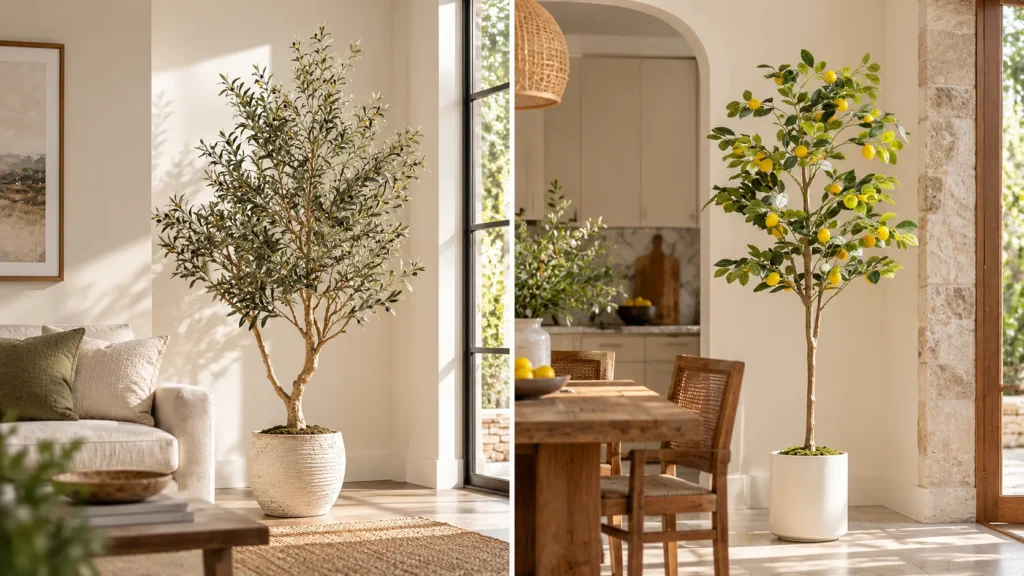
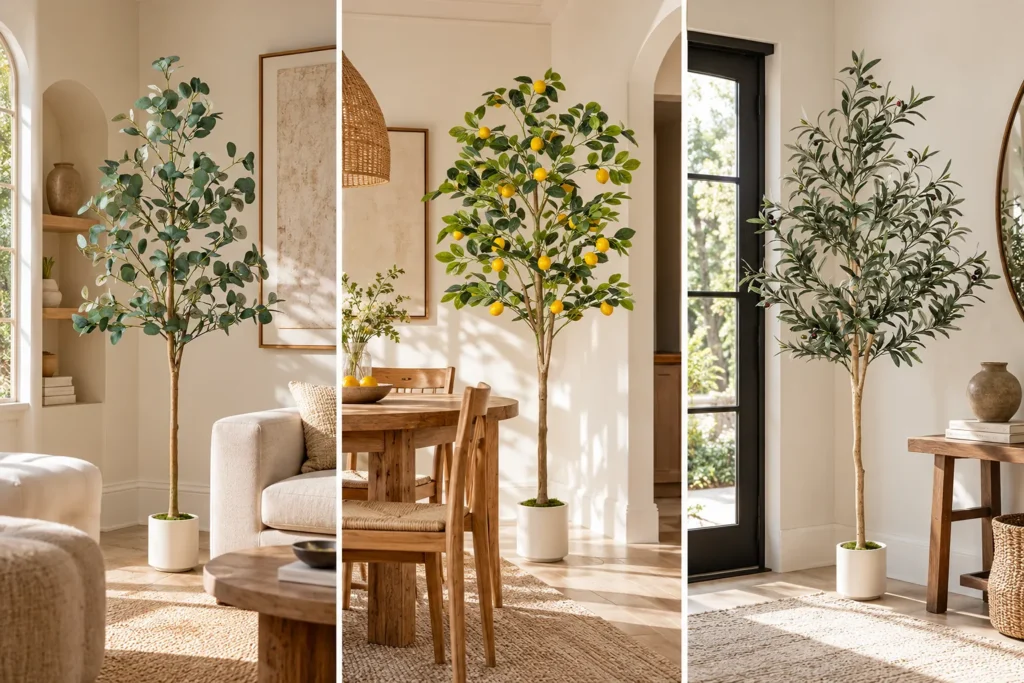
For example, an artificial olive tree with an airy canopy can complement a neutral living room without dominating the space. Its slender branches and muted green leaves bring subtle movement to an otherwise structured interior.
An artificial eucalyptus tree offers a different effect. Its rounded, dusty-green foliage can work beautifully alongside light wood, linen, and other natural materials.
Choose a tree that complements your interior style
Different tree varieties create different moods.
Artificial olive trees suit organic modern, Mediterranean-inspired, and relaxed contemporary interiors. Their slender leaves and naturally irregular branches add understated character.
Artificial eucalyptus trees complement Scandinavian, Japandi, and minimalist spaces with their softer leaf shapes and muted colors.
Artificial lemon trees introduce brighter color and a more cheerful atmosphere, making them attractive for casual dining spaces, farmhouse-inspired interiors, and Mediterranean-style rooms.
Artificial cedar trees offer a more structured, evergreen silhouette that can complement traditional, transitional, and seasonal entryway arrangements.
At Adorbox, natural-looking silhouettes are an important part of the decorative appeal. Rather than treating every tree as a uniformly rounded mass of foliage, the collection features distinct branching patterns, canopy shapes, and leaf characteristics that reflect the visual identity of different tree varieties.
The goal is to help a tree feel like a natural part of the room rather than an oversized decorative accessory.
For more practical ideas about arranging trees around furniture and available floor space, explore our guide, Where to Place an Artificial Tree in Your Home.
4. Keep Your Home Looking Consistent Year-Round
Living trees naturally change as they grow. Leaves may emerge, mature, discolor, or fall depending on the species and growing conditions.
For homeowners who enjoy these changes, they are part of the appeal of having real plants.
Others prefer a more predictable decorative arrangement.
Artificial trees maintain a relatively consistent shape and appearance throughout the year, making them useful for spaces where homeowners want their interior styling to remain stable.
A decorative olive tree can complement a living room in every season, while a cedar tree can transition between everyday greenery and seasonal decorating.
Small changes to surrounding accessories, textiles, or planters can refresh the setting without replacing the tree itself.
This makes artificial trees particularly useful as long-term decorative elements rather than short-lived seasonal accents.
5. What Makes an Artificial Tree Worth Buying?
Not all artificial trees offer the same visual quality.
Two trees may have similar heights and appear comparable in product photographs, yet look noticeably different once placed in a real room.
The difference often comes down to foliage, branching, proportions, construction, and how well the tree arrives after transportation.
Understanding these details can help homeowners choose a tree they will enjoy displaying.
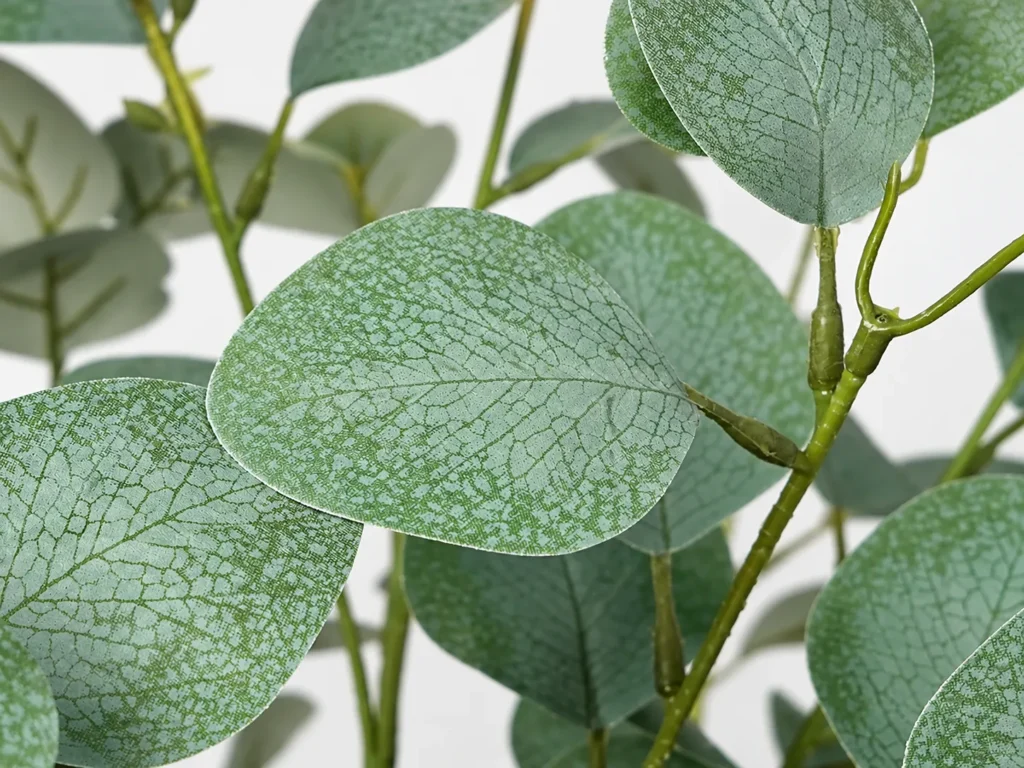
Realistic foliage starts with the details
Natural trees rarely have perfectly identical leaves or completely uniform branching patterns.
A convincing artificial tree should reflect some of this variation.
Look closely at leaf shapes, surface finishes, color consistency, and how foliage is distributed along the branches.
An olive tree, for instance, should have the slender leaf shapes and open branching structure associated with olive trees. A eucalyptus tree should present the rounded foliage and softer visual character that make eucalyptus distinctive.
Realism doesn’t necessarily mean having the greatest possible number of leaves.
A slightly open canopy can appear more natural than an overly dense, perfectly symmetrical arrangement, particularly when the real tree variety naturally has an airy growth habit.
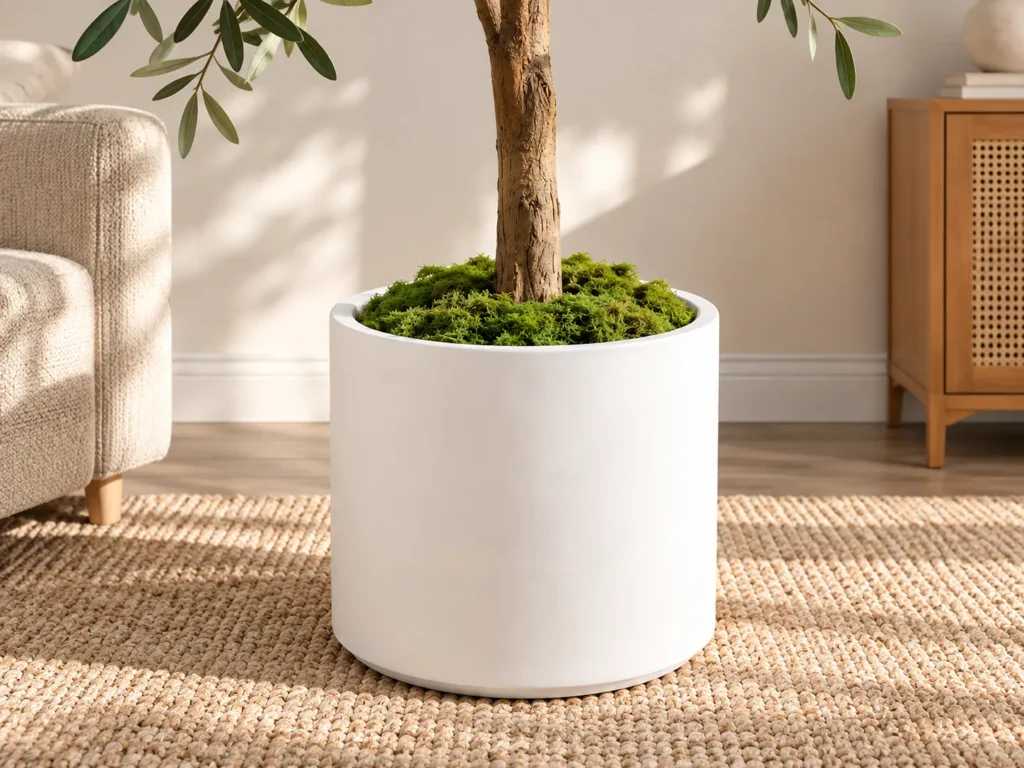
Branch structure and overall proportions matter
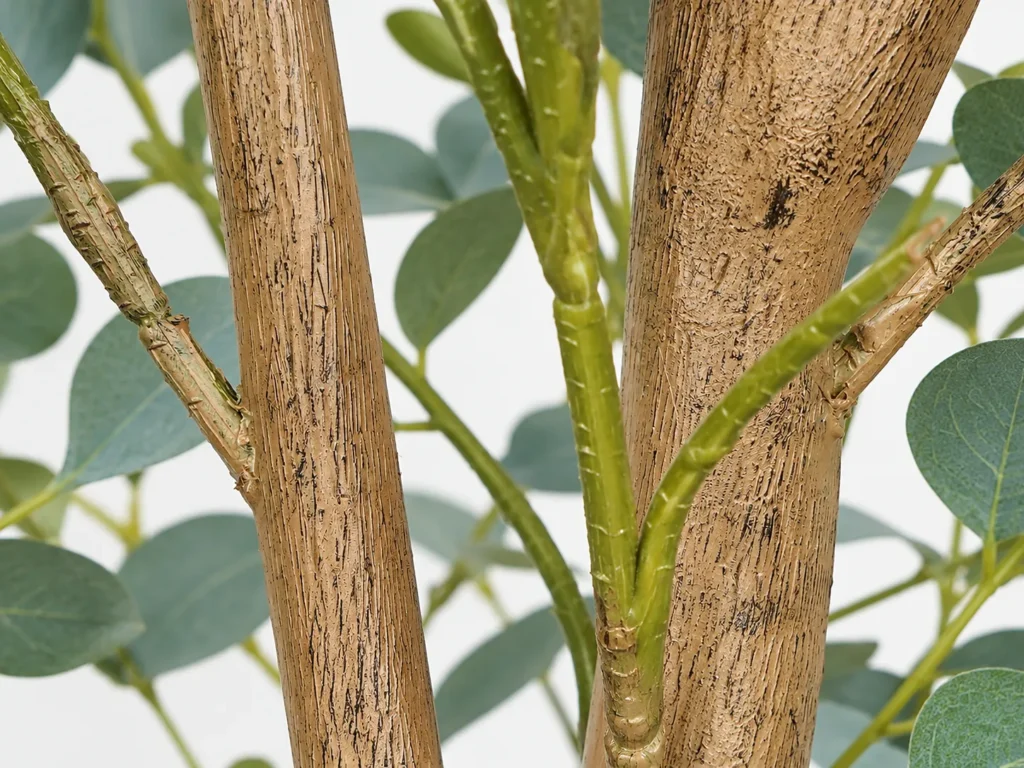
The trunk and branches are just as important as the foliage.
A tree with attractive leaves may still look artificial if its trunk appears disproportionate or its branches are arranged in an unnatural pattern.
Consider how the canopy relates to the overall height, whether the trunk looks appropriate for the variety, and how the branches extend from the main structure.
It’s also worth checking product photographs that show the entire tree rather than relying only on close-up images.
At Adorbox, attention to recognizable tree shapes, natural-looking branches, and foliage details helps create decorative trees that fit comfortably into residential interiors.
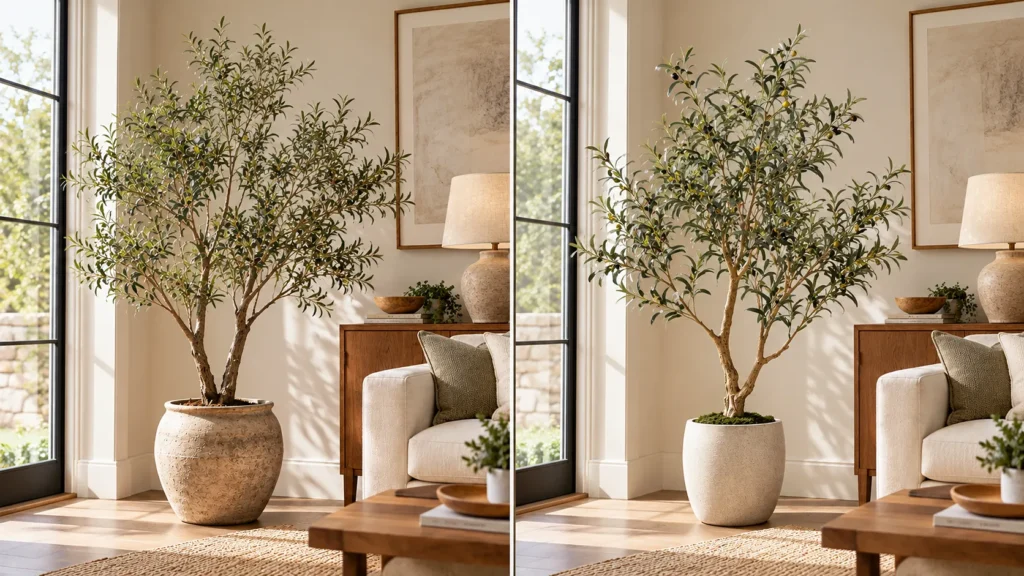
The collection includes both slender single-trunk designs and fuller multi-trunk arrangements, allowing homeowners to choose a silhouette that suits their available space and preferred style.
Good packaging is part of product quality
Even a well-designed artificial tree can disappoint if it arrives with damaged branches, a broken planter, or other transportation-related problems.
That’s why packaging deserves attention alongside appearance.
Adorbox uses reinforced protective packaging designed to help prevent damage during shipping, providing additional protection for the tree and its components while in transit.
Protective packaging helps reduce transportation-related risks, although no packaging can guarantee that damage will never occur.
After unpacking, some branches may still need gentle adjustment to restore the intended shape. This is a normal part of setting up many artificial trees and should not automatically be confused with product damage.
A worthwhile artificial tree combines appealing design with practical considerations that support the experience from delivery to final placement.
6. Artificial vs. Real Trees: Which Is Better for Your Home?
Artificial trees and living trees can both be beautiful additions to a home. The better choice depends on what you want from your greenery.
| Consideration | Artificial Trees | Living Trees |
|---|---|---|
| Daily care | Occasional dusting and reshaping | Watering and species-specific care |
| Sunlight | No light needed for growth | Light requirements vary by species |
| Appearance | Relatively consistent year-round | Changes naturally over time |
| Natural experience | Decorative visual appeal | Living growth, natural textures, and sometimes fragrance |
| Placement flexibility | Suitable for many areas where growing conditions are poor | Placement depends on plant requirements |
| Initial cost | Varies by size, materials, and construction | Varies by species, maturity, and size |
| Long-term considerations | Cleaning, storage, material durability, and eventual disposal | Ongoing care, potential repotting, and possible replacement |
When an artificial tree may be the better choice
An artificial tree can make sense when your main goal is visual decoration rather than growing and caring for a living plant.
It may be especially useful when natural light is limited, your schedule makes regular plant care difficult, or you want a consistent decorative arrangement.
Artificial trees also allow homeowners to enjoy the appearance of certain tree varieties indoors without needing to recreate their preferred growing conditions.
When a real tree may be the better choice
Living trees offer experiences that artificial versions cannot fully reproduce.
They grow, respond to their environment, and change over time. Living houseplants can also offer benefits beyond decoration. The Royal Horticultural Society discusses the potential wellbeing benefits of indoor plants, including their relationship with psychological wellbeing.Some offer natural fragrance, while others provide the satisfaction of nurturing a plant over many years.
If you enjoy gardening, have suitable indoor conditions, and appreciate the changing nature of living greenery, a real tree may be more rewarding.
What about cost and sustainability?
Artificial trees may help some households avoid the repeated expense of replacing unsuccessful indoor plants, but they aren’t automatically cheaper.
The long-term value depends on the purchase price, durability, how long the tree is used, and the costs associated with maintaining a comparable living tree.
Environmental comparisons are also more complex than they first appear. Artificial trees require manufactured materials and production processes, while living plants involve their own growing, transportation, and maintenance requirements.
Neither option should be described as universally more sustainable without a meaningful comparison of its full lifecycle.
For many homes, the most satisfying solution is a combination of both: living plants where growing conditions are suitable and artificial trees where convenience or placement flexibility matters more.
7. How to Choose an Artificial Tree That Fits Your Lifestyle
Once you’ve decided that an artificial tree makes sense for your home, the next step is choosing one that fits your space and decorating preferences.
Start with three practical questions.
What role should the tree play in the room?
A tree intended to become a visual focal point may need a different height and canopy shape from one designed to complement furniture in a smaller corner.
Which tree style matches your interior?
Consider the atmosphere you want to create. An airy olive tree offers a different visual character from a colorful lemon tree or a structured cedar tree.
How much space do you actually have?
Measure the available height and floor area, but don’t overlook canopy width and the space needed around nearby furniture.
A taller tree isn’t always the better choice, and a narrower tree may be more suitable than a shorter but wider one.
Explore the Adorbox artificial tree collection to compare different tree varieties, silhouettes, and available heights before deciding.
Frequently Asked Questions
Are artificial trees worth buying for home decoration?
They can be a worthwhile choice for homeowners who want the appearance of indoor greenery without ongoing plant care. Their value depends on design quality, durability, price, and how well they complement the intended space.
Do artificial trees look realistic?
Some do, particularly when their foliage, trunk, branching structure, and overall proportions resemble the natural tree variety. Product quality varies, so full-tree photographs and close-up details are useful when comparing options.
Can you put an artificial tree in a room without windows?
Yes. Artificial trees don’t require sunlight for growth, making them suitable for windowless rooms and low-light areas. However, they should still be positioned away from excessive heat or other conditions that could damage their materials.
Do artificial trees need cleaning?
Yes. Occasional dusting helps maintain their appearance. Use gentle cleaning methods appropriate for the tree’s materials and follow the manufacturer’s care instructions.
Can you mix artificial trees with real houseplants?
Absolutely. Combining artificial trees with living plants can create a layered, natural-looking arrangement. Use real plants where growing conditions are suitable and artificial greenery where maintaining living plants would be difficult.
Which artificial tree is best for a living room?
There is no single best variety. Olive trees work well in many organic modern and Mediterranean-inspired interiors, eucalyptus trees complement softer minimalist styles, and other varieties may suit more colorful or structured decorating schemes. The right choice depends on your room’s proportions, furniture, and personal preferences.
Final Thoughts: Choose Greenery That Works for Your Home
A welcoming home doesn’t depend on whether every plant is real.
What matters is how the elements in a room work together to create a comfortable, balanced, and personal space.
Artificial trees offer a practical way to introduce natural-looking shapes, greenery, and visual warmth into homes where living trees may be difficult to maintain.
They aren’t a replacement for every benefit of real plants, and their quality deserves careful consideration. But when chosen thoughtfully, a realistic artificial tree can become a lasting part of your home’s decorative style.
Explore Adorbox Artificial Trees to discover olive, eucalyptus, lemon, and cedar tree designs for different rooms, styles, and spaces.