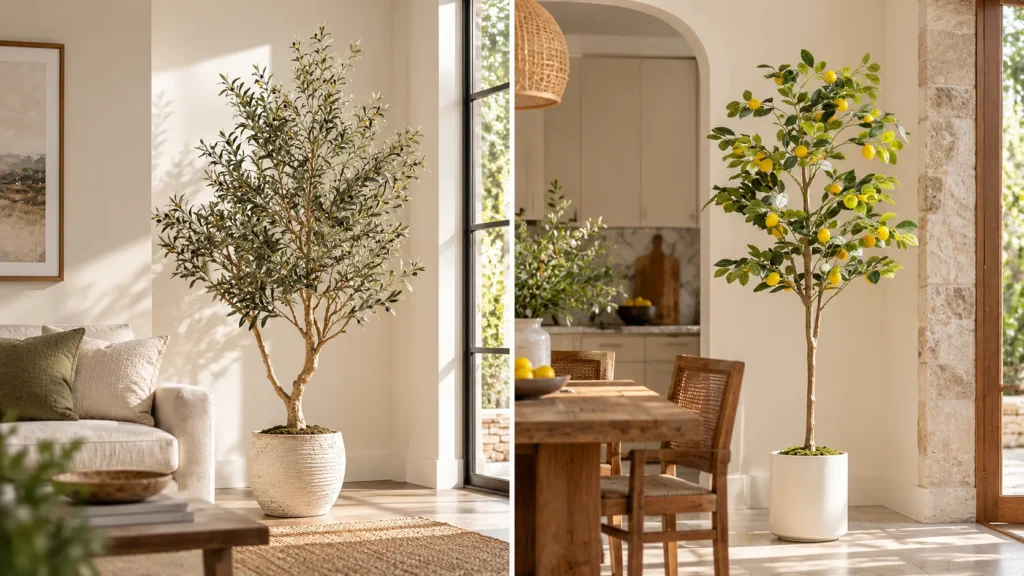
Artificial trees bring greenery into your home without the watering, pruning, or sunlight requirements of living plants. But like other decorative furnishings, they can collect dust over time.
The good news is that routine care is usually simple. The key is to handle the foliage gently, use suitable cleaning tools, and avoid methods that could damage delicate leaves, decorative fruit, or surface finishes.
Here’s how to keep your artificial tree looking its best.
1. Start With Gentle, Dry Dusting
For routine maintenance, begin with the least aggressive cleaning method.
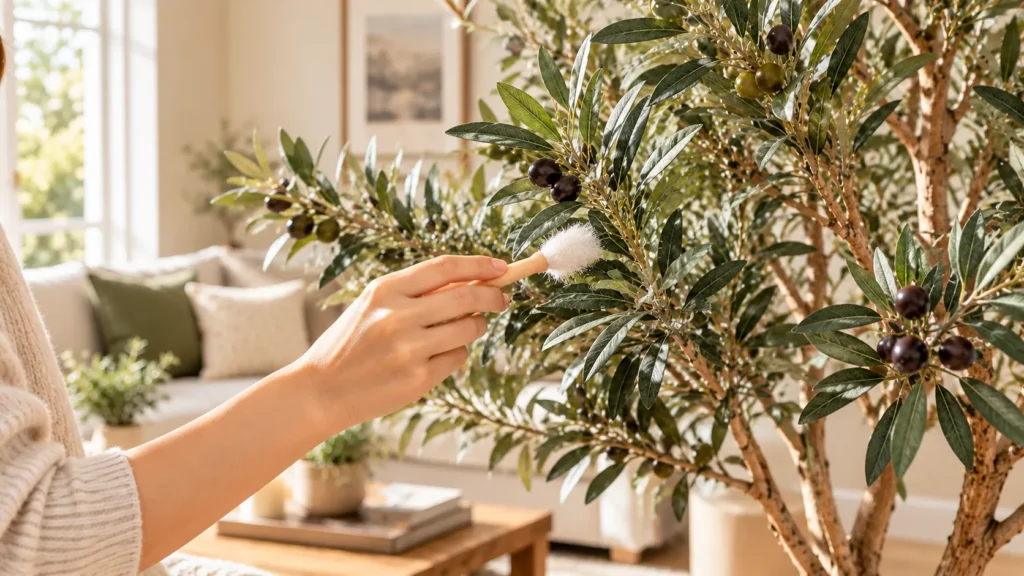
A soft, clean microfiber cloth or a soft-bristled dusting brush can help remove loose dust from accessible surfaces without requiring moisture or cleaning chemicals.
Follow these steps:
- Make sure the tree is standing securely on a level surface.
- Begin with the upper branches and work downward.This top-to-bottom approach is also recommended in the American Cleaning Institute’s Tips and Tricks for Dusting, which explains how to avoid dusting the same areas repeatedly.
- Lightly brush or wipe accessible leaves, supporting delicate branches when needed.
- Use gentle movements around stems, branch joints, and decorative fruit.
- Check the base and surrounding floor for any fallen dust.
Avoid pulling leaves, twisting branches, or scrubbing textured surfaces.
For narrow leaves, such as those found on many artificial olive trees, gentle brushing may be easier than trying to wipe each leaf individually.
2. Be Careful With Different Types of Foliage
Not all artificial leaves are made from the same materials or finished in the same way.
Some have printed color variations, textured surfaces, or decorative coatings. Others may have flexible internal supports that help the foliage maintain its shape.
Because construction varies, a cleaning method that works for one tree may not be suitable for another.
Artificial olive trees
Use gentle movements around the slim leaves and smaller stems. Avoid repeatedly bending leaf tips while removing dust.
Artificial eucalyptus trees
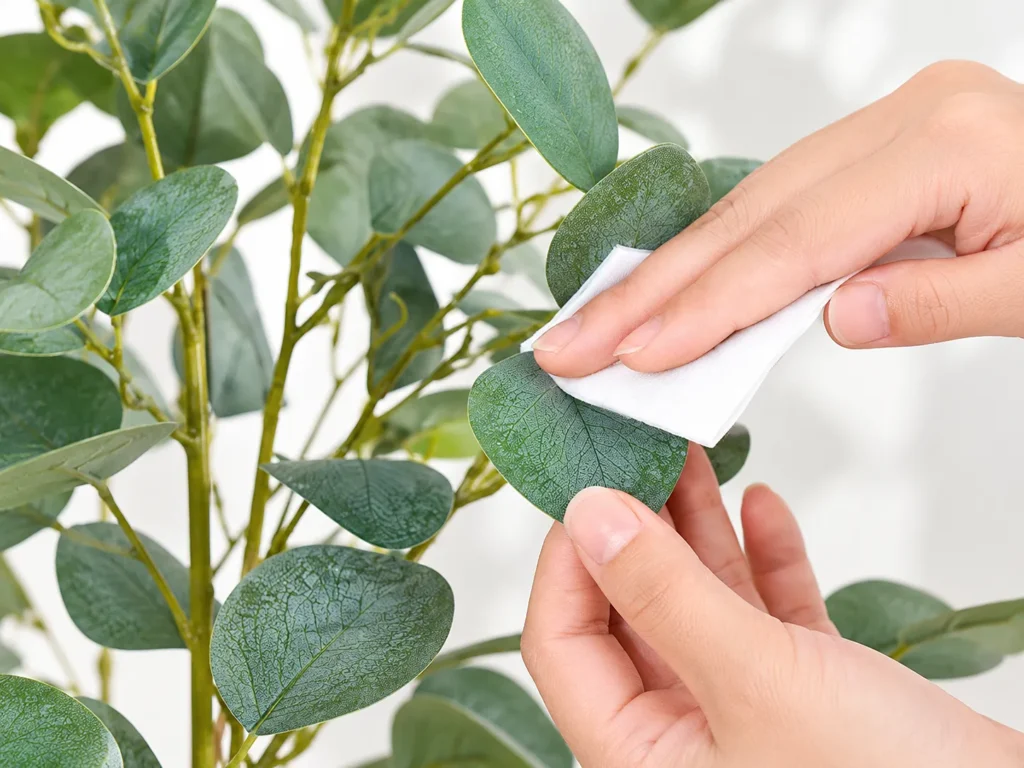
Pay particular attention to the surfaces of the rounded leaves. Use a soft tool rather than pressing or rubbing the foliage aggressively.
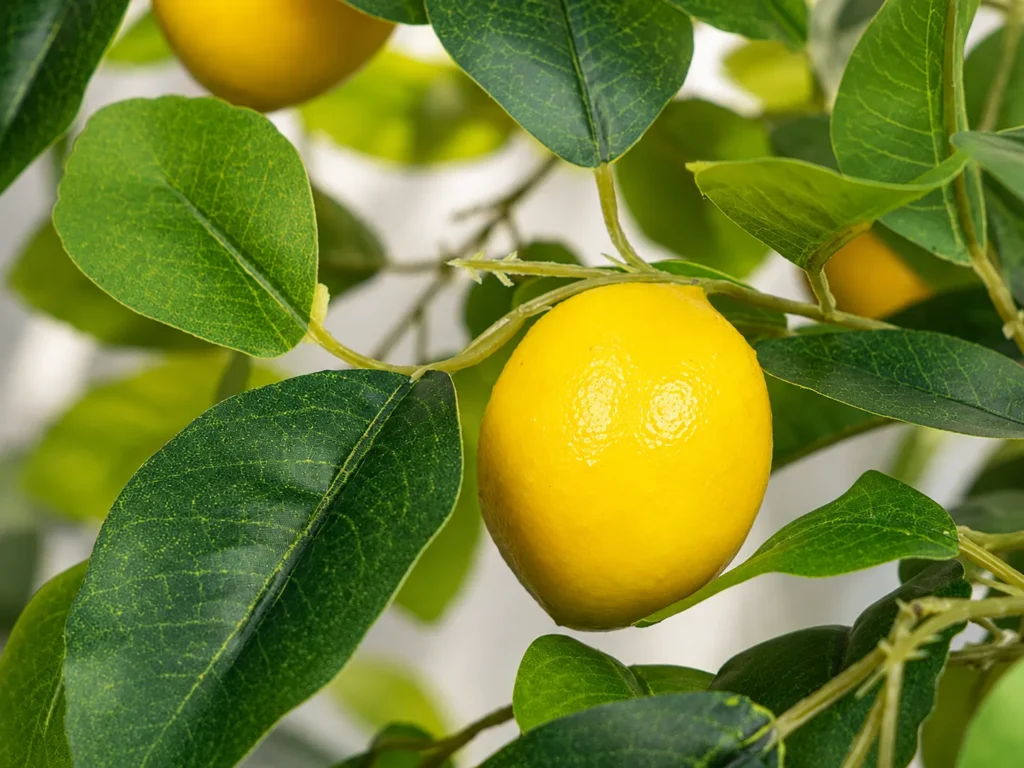
Artificial lemon trees
Clean around decorative lemons and their attachment points with extra care. Avoid pulling on fruit or using cleaning methods that could affect its finish.
Artificial cedar trees
A soft dusting brush can help reach the narrow spaces within the foliage. Work lightly from the outside rather than forcing a cloth deep into dense branches.
Always follow the care instructions provided with your specific tree if they differ from these general suggestions.
3. Should You Use Water to Clean an Artificial Tree?
It’s tempting to rinse dusty artificial foliage or spray it with water, but not every artificial tree is designed for wet cleaning.
Water can affect certain surface finishes, adhesives, internal components, or decorative materials. Moisture may also collect in areas that are difficult to dry.The American Cleaning Institute’s Cleaning Plastic guide also emphasizes checking manufacturer instructions and using cleaning methods appropriate for the material. These general recommendations do not replace the care instructions for an artificial tree.
Unless the manufacturer specifically approves wet cleaning for your model, avoid:
- Rinsing the tree under a shower or hose
- Soaking leaves or branches
- Spraying water directly onto the foliage
- Using household cleaning solutions or disinfectants
- Applying alcohol, bleach, or abrasive cleaners
- Using steam cleaners or hot air to remove creases
If a mark cannot be removed with gentle dry dusting, consult the product’s care instructions or contact the seller before trying another method.
4. Keep the Trunk and Decorative Details in Good Condition
The trunk, branches, and decorative fruit contribute just as much to a tree’s appearance as the leaves.
For textured trunks, use a soft brush to remove dust from shallow grooves and uneven surfaces. Avoid hard brushes that may scratch or disturb the finish.
If your tree includes olives or lemons, clean around them carefully without pulling on the attachments.
For the original planter, gently remove loose dust with an appropriate dry cloth. If the tree is placed inside a larger decorative container, check that dust and debris haven’t accumulated around the base.
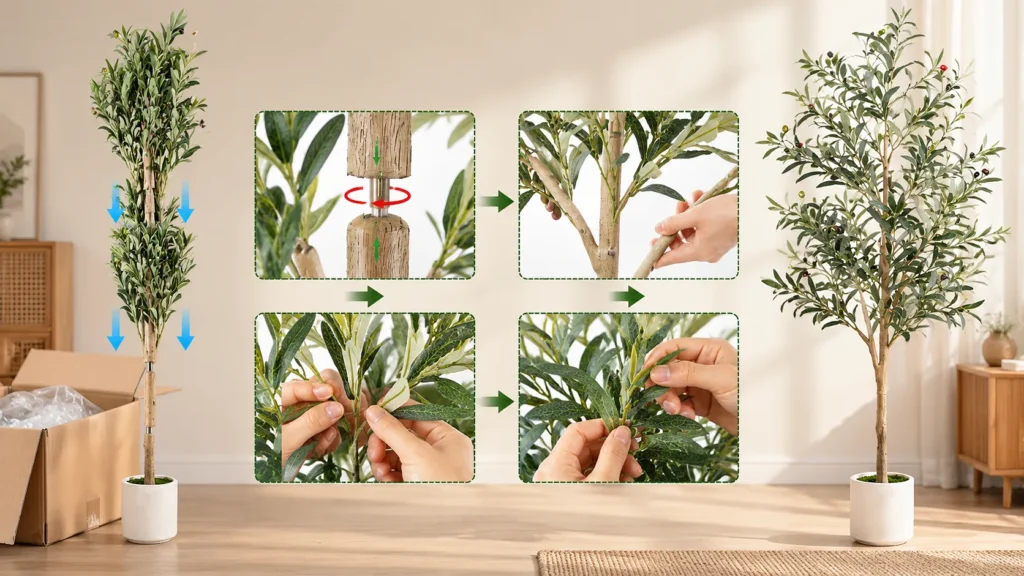
Do not disassemble structural connections simply to clean the tree unless the manufacturer’s instructions specifically allow it.If you’re unsure how your tree’s sections connect or how its branches should be handled, refer to our How to Assemble and Shape an Artificial Tree video guide before making adjustments.
5. Choose a Location That Makes Maintenance Easier
Where you place an artificial tree can influence how quickly it gathers dust and how easily you can care for it.
Consider keeping the tree away from:
- Frequently opened windows where dust blows inside
- Cooking areas where airborne grease may settle on leaves
- High-traffic spots where branches are regularly brushed or bumped
- Heating vents and other sources of concentrated heat
Also consider direct sunlight.
Artificial trees are not automatically UV-resistant. Prolonged exposure may cause fading or deterioration, depending on the materials and finish.
Adorbox’s current artificial tree collection is primarily intended for indoor decorative use and is not specifically rated for prolonged outdoor UV exposure or year-round weather conditions.
For long-term appearance, indoor placement is recommended.For more ideas on choosing a suitable spot for your tree, read our Where to Place an Artificial Tree in Your Home guide.
6. Check Your Tree Periodically
A quick visual inspection can help you identify minor issues before they become more noticeable.
As part of routine care, look for:
- Dust collecting on leaves and branch joints
- Loose decorative fruit or foliage
- Branches that have shifted out of position
- Changes in the trunk or branch connections
- A base that no longer sits securely on the floor
If you notice a loose structural component, damaged attachment, or instability, stop moving or adjusting that part and refer to the manufacturer’s instructions.
Avoid using glue, wire, or improvised repairs on structural components without appropriate guidance.
7. What If You Need to Move or Store Your Tree?
Artificial trees may need to be moved during cleaning, redecorating, or seasonal changes.
Before moving yours, check that all sections are secure. Support the tree appropriately, following its model-specific handling instructions, rather than pulling it by a branch or decorative foliage.
If you plan to store the tree:
- Remove loose dust first.
- Keep all original components and instructions together.
- Avoid placing heavy objects on the foliage.
- Use suitable protective packaging to limit compression and accidental damage.
- Choose a clean, dry storage location away from excessive heat and prolonged direct sunlight.
Do not force branches into a smaller space or dismantle connections unless the product is designed for that process.After moving or storing your tree, its foliage may need gentle reshaping. For practical styling ideas, see How to Make an Artificial Tree Look More Realistic.
Frequently Asked Questions
How often should I dust an artificial tree?
There is no universal schedule. Check the foliage periodically and dust it when buildup becomes visible. Trees near windows, vents, or busy areas may need attention more often.
Can I spray an artificial tree with water?
Only if the manufacturer confirms that wet cleaning is suitable for your specific model. Otherwise, gentle dry dusting is the safer starting point.
Can I use a hair dryer to blow dust off artificial leaves?
Hot air may affect certain materials and finishes, while strong airflow can disturb delicate foliage or attachments. A soft brush or microfiber cloth is generally a more controlled choice.
How do I clean an artificial lemon tree without damaging the fruit?
Use a soft, dry tool around the fruit and attachment points. Avoid pulling, twisting, soaking, or applying strong cleaning products.
Can artificial trees fade in sunlight?
Yes. Depending on the materials, prolonged direct sunlight and UV exposure can cause fading or deterioration. Do not assume a tree is UV-resistant unless the product specifications explicitly state that it is.
What should I do if a leaf or branch is damaged?
Check the product instructions and contact the seller for guidance. Cleaning and branch shaping cannot necessarily repair damaged materials or structural connections.
A Little Care Goes a Long Way
Keeping an artificial tree looking attractive doesn’t require an elaborate routine.
Gentle dusting, careful handling, and thoughtful placement can help maintain its appearance without exposing delicate materials to unnecessary wear.
For more help with the initial setup, explore our How to Assemble and Shape an Artificial Tree video guide. And if you’re looking for ideas on arranging your tree at home, visit our How to Make an Artificial Tree Look More Realistic guide.